FRP Tank Sensor Integration: A Comprehensive Guide to Smart Monitoring
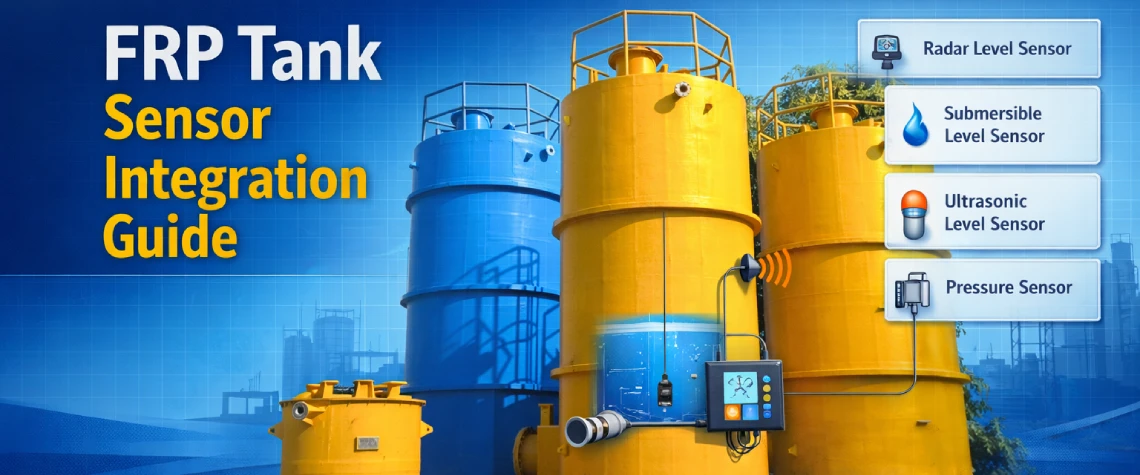
FRP Tank Sensor Integration Guide
In today’s demanding industrial landscape, simply storing materials is no longer sufficient. Proactive monitoring and precise data management have become essential for safety, efficiency, and regulatory compliance. This is where effective FRP Tank Sensor Integration transforms a passive storage vessel into a intelligent asset. For operators and specifiers working with FRP (Fiber Reinforced Plastic) tanks, integrating the correct sensor technology is a critical step. This guide provides a detailed roadmap. We will explore sensor types, installation protocols, and data utilization strategies. Ultimately, this ensures your containment system operates with optimal reliability and intelligence.
Understanding the FRP Tanks Advantage for Sensor Systems
Firstly, FRP tanks offer a unique substrate for sensor integration. Their non-corrosive nature is a key benefit. This makes them ideal for harsh chemical environments. Consequently, they are the premier choice for Chemical Storage Tank Manufacturers and Acid Storage Tank Manufacturers. The composite material does not react with stored media. Therefore, sensor readings remain uncontaminated by tank wall corrosion. Additionally, FRP allows for flexible mounting options. Sensors can be installed through custom nozzles or specialized bossings. This flexibility is designed into the tank from the outset. Reputable FRP Storage Tank Manufacturers understand this need. They often pre-install fittings to simplify future integration.
Core Sensor Types for FRP Tank Monitoring
Selecting the appropriate sensor is paramount. Your choice depends entirely on the stored material and the data you need. Below, we break down the most common and critical sensor categories.
Level Measurement Sensors
Accurate level measurement is the most fundamental monitoring need. It prevents overfills and manages inventory.
Ultrasonic and Radar Level Sensors
These non-contact sensors mount at the tank top. They emit signals to the liquid surface. Then, they measure the reflection time. Therefore, they are perfect for corrosive or viscous liquids. They never contact the stored material. Importantly, they require a clear signal path. Always ensure internal obstructions are absent.
Pressure Transmitters
Hydrostatic pressure sensors gauge liquid height. They install at the tank’s base or on a side nozzle. The pressure exerted by the liquid column correlates directly to level. However, liquid density must be consistent for accuracy. These sensors are highly reliable. They provide continuous, direct measurement.
Float Switches and Capacitance Probes
Float switches offer simple point-level detection. They activate at predetermined full or empty levels. Capacitance probes, meanwhile, detect level changes by sensing capacitance shifts. Both are effective for basic alarm functions. They are also cost-effective for straightforward applications.
Environmental and Condition Sensors
Beyond level, monitoring the tank’s internal and external environment is crucial.
Temperature Sensors
Temperature greatly affects many stored chemicals. Integrated thermowells allow probe insertion. This monitors liquid temperature continuously. Therefore, you can prevent freezing or dangerous exothermic reactions.
Leak Detection Sensors
Secondary containment integrity is vital. Sensor mats or interstitial probes detect leaks between tank walls. Alternatively, area sensors in dikes identify spills early. This provides an essential safety backup layer.
Strategic Installation and Calibration Protocols
Proper installation ensures sensor longevity and data accuracy. Careless mounting can lead to failure or false readings.
Collaboration with FRP Storage Tank Manufacturers
The best integration begins early. Consult your FRP Storage Tank Manufacturers during the design phase. They can install reinforced nozzles and bossings precisely. Furthermore, they understand tank stress points. They will recommend optimal locations for sensor ports. This proactive approach prevents field modifications. Those modifications could compromise tank integrity.
Chemical Compatibility is Paramount
Always verify sensor wetted material compatibility. The sensor must resist the specific stored acid or chemical. Chemical Storage Tank Manufacturers stress this point. An incompatible sensor will degrade quickly. It can also contaminate the product. Request chemical resistance charts from your sensor provider. Then, cross-reference them with your media.
Ensuring Precise Calibration
Calibration translates sensor signals into accurate data. Perform initial calibration after installation. Additionally, establish a regular recalibration schedule. On-site calibration is often possible. However, factory recalibration may be needed annually. Meticulous calibration records are also essential. They support quality audits and regulatory compliance.
Data Integration and Operational Intelligence
Sensors generate raw data. Your system must transform this into actionable insight.
From Signals to Centralized Monitoring
Modern sensors connect to PLCs (Programmable Logic Controllers) or SCADA systems. Use robust signal transmitters for long-distance data runs. Then, centralize monitoring on a control room dashboard. This gives operators a real-time overview of all tanks. Consequently, they can make informed decisions swiftly.
Implementing Alarms and Automated Controls
Configure clear alarm thresholds for each parameter. Set high and low-level alarms first. Then, add temperature deviation alerts. These alarms can trigger audible alerts or text messages. Moreover, they can initiate automated responses. For example, a high-level alarm could automatically shut down a feed pump. This automation prevents human error and enhances safety.
Addressing Challenges in Sensor Integration
Even with planning, challenges can arise. Anticipating these issues saves time and cost.
Managing Signal Interference
Electrical noise from pumps or motors can disrupt sensor signals. Use shielded cabling to mitigate this. Also, ensure proper grounding for all instruments. Additionally, follow manufacturer guidelines for cable separation from power lines.
Handling Vapors and Coating
Some chemicals generate heavy vapors or cause coating. This can foul non-contact sensors like ultrasonics. Regular inspection and cleaning schedules are necessary. For severe cases, consider a different sensor technology. A pressure transmitter might be a more robust choice here.
Ensuring Long-Term Maintenance Access
Sensors will require inspection and service. Design installations with maintenance access in mind. Include isolation valves for wet-tap sensors. Also, use durable junction boxes for electrical connections. This foresight simplifies upkeep and reduces downtime.
The Critical Role of Expert Manufacturers
Your project’s success hinges on expert collaboration. Partnering with the right fabricator is essential.
Leveraging Manufacturer Expertise
Specialist Acid Storage Tank Manufacturers possess invaluable experience. They understand how sulfuric, hydrochloric, or nitric acid interacts with systems. They can recommend sensor types proven in these extreme conditions. Their guidance prevents costly trial and error.
Demanding Customization and Support
Do not accept a one-size-fits-all approach. Reputable FRP Storage Tank Manufacturers offer customization. They provide specific nozzle orientations and custom fittings. Furthermore, they offer technical support for integration questions. This partnership extends far beyond the initial tank sale.
Future-Proofing Your FRP Tank Investment
Technology evolves rapidly. Your integration strategy should accommodate future upgrades.
Designing for Scalability
Install conduit and spare nozzles during initial construction. This prepares the tank for additional sensors later. Scalability protects your investment. It allows for new monitoring capabilities as needs change.
Embracing IoT and Wireless Trends
The Industrial Internet of Things (IIoT) is transforming monitoring. Wireless sensor networks are now viable. They reduce installation wiring costs dramatically. Many modern sensors offer wireless protocols. Consider this technology for new installations or expansions. It provides exceptional flexibility and data accessibility.
Conclusion: Achieving Integration Excellence
In summary, successful FRP Tank Sensor Integration is a multi-stage process. It begins with selecting the correct sensor for your chemical. Then, it requires meticulous installation and calibration. Finally, it demands smart data management and expert collaboration. Engaging with knowledgeable FRP Storage Tank Manufacturers, including specialized Chemical Storage Tank Manufacturers and Acid Storage Tank Manufacturers, is crucial. Their expertise guides every step. A well-integrated sensor system delivers immense value. It ensures operational safety, protects the environment, and optimizes inventory control. Therefore, view sensor integration not as an add-on, but as a core component of your FRP storage solution. Start the conversation with your manufacturer today. Transform your tank into a intelligent, reliable, and future-ready asset.