
What Are the Safety Parameters for PAC Storage Tanks?
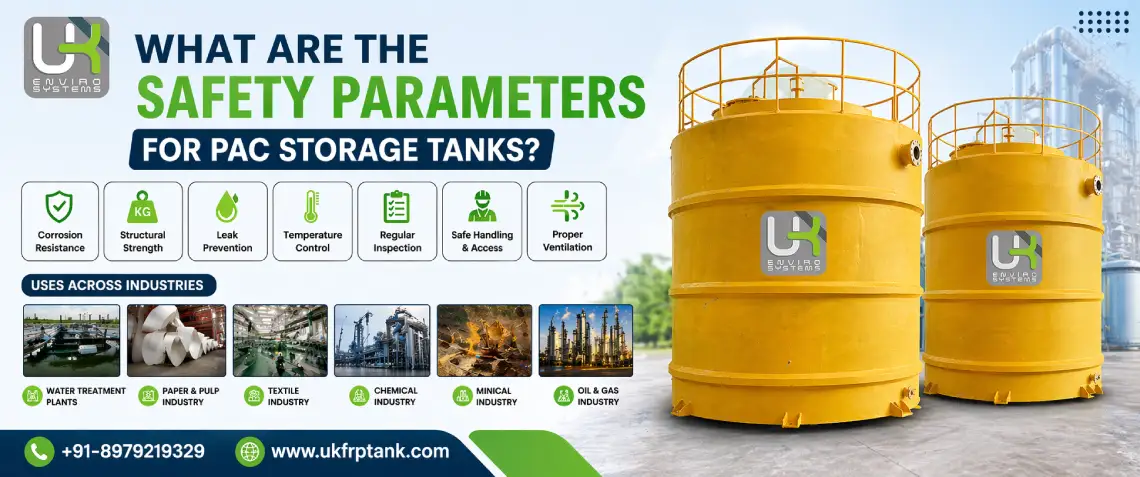
Storing chemicals safely demands precision and expert knowledge. Industries rely on top-tier Polyaluminium Chloride Storage Tank Manufacturers to meet these strict requirements. Polyaluminium Chloride (PAC) serves as a critical coagulant in water treatment facilities worldwide. However, its acidic nature presents unique challenges for containment. This guide explores the essential safety parameters for PAC storage. We will focus on material selection, design integrity, and operational protocols. The goal remains clear and simple. Prevent leaks, protect personnel, and preserve the environment. UK Enviro Systems leads this charge with robust FRP solutions. We understand that safety is not an option. It is the foundation of every industrial operation.
Understanding Polyaluminium Chloride and Its Storage Needs
Before diving into safety protocols, we must understand the substance. PAC is an aluminum-based coagulant. It efficiently removes suspended solids from water. Yet it is highly corrosive, especially in concentrated liquid form. Therefore, storage systems require specialized engineering and careful monitoring.
Chemical Properties of PAC
Polyaluminium Chloride is typically delivered as a yellowish to brown liquid. It possesses a low pH, often between 2.0 and 4.0. Consequently, this acidity attacks unprotected metal surfaces aggressively. The solution also generates hydrogen gas in certain confined conditions. This fact elevates ventilation from a suggestion to a strict necessity. PAC Chemical Storage Tanks must withstand these chemical attacks without degradation. Furthermore, the specific gravity of PAC is higher than water. This means the tank structure must support extra weight and hydrostatic pressure.
Why Specialized Storage Matters
Standard water tanks or mild steel vessels fail rapidly when storing Polyaluminium Chloride Storage Tanks. Corrosion leads to wall thinning and catastrophic rupture. Moreover, Liquid PAC Storage Tanks require a specific internal surface barrier. A compromised tank risks worker exposure to acidic burns. It also threatens soil and groundwater contamination. Therefore, industries must invest in Industrial PAC Tanks built for this exact purpose. These are not generic containers. They are engineered safety systems designed for long-term chemical compatibility.
Key Safety Parameters for PAC Storage Tanks
Safety in PAC Storage Tanks hinges on several non-negotiable parameters. Overlooking even one detail can trigger a dangerous chain reaction. Here are the core pillars of safe PAC containment.
Material Compatibility and Corrosion Resistance
The most critical safety parameter involves the tank’s internal wall material. Metallic options like stainless steel 316L can handle diluted PAC. However, they often suffer pitting corrosion over time. Fiberglass Reinforced Plastic (FRP) stands as the superior choice for Aluminium Chloride Storage Tanks. FRP offers exceptional resistance to the chloride ion attack. Inside the tank, a corrosion barrier of resin-rich liner provides the first line of defense. This liner prevents chemical wicking into the structural laminate. Leading Polyaluminium Chloride Storage Tank Manufacturers use vinyl ester or isophthalic resins for the inner layer. These materials resist the acidic bite of PAC effectively. Without this compatibility, safety fails before the tank is even filled.
Tank Design and Structural Integrity
Safety extends beyond the material to the tank’s physical architecture. Poly Aluminium Chloride Storage Tanks must manage both static and dynamic loads. The tank wall thickness calculations consider the high specific gravity of PAC. A design for water storage proves inadequate for PAC Solution Storage Tanks. The structure requires proper anchorage to prevent wind or seismic uplift. Additionally, the top head must support vacuum conditions if vents clog. A poorly designed flat bottom can create stress cracks at the knuckle radius. Therefore, experienced Polyaluminium Chloride Storage Tank Manufacturers engineer tanks with conical bottoms. This design facilitates complete drainage. It eliminates standing liquid that accelerates corrosion at the weld seams. Structural integrity also includes the support frame for Industrial PAC Tanks. Legs and saddles require sturdy bracing and corrosion-resistant coatings.
Ventilation and Pressure Management
Pressure changes pose a silent but significant threat to PAC Storage Tanks. As ambient temperatures rise, the liquid expands. This expansion pushes vapor out of the tank. As temperatures drop, the tank breathes in outside air. If the vent pipe is blocked or undersized, the tank can implode or rupture. Therefore, pressure vacuum relief valves are mandatory for Chemical Storage Tanks holding PAC. These devices maintain internal pressure within safe limits. Moreover, PAC decomposition or metal contact may release hydrogen gas. Hydrogen is highly flammable. Acid Storage Tanks must have vents directed away from ignition sources. The vent discharge needs routing to a safe outdoor location. Never store Liquid PAC Storage Tanks in a sealed, unventilated room. Proper airflow prevents the accumulation of corrosive fumes and explosive gases.
Leak Detection and Secondary Containment
No safety plan relies solely on the primary tank wall. Secondary containment forms a legal and moral obligation. Bund walls or dikes must surround all PAC Chemical Storage Tanks. This containment area must hold 110% of the total tank volume. It accounts for the displacement of the tank itself during a full breach. A liquid-tight concrete pad coated with chemical-resistant epoxy works best. Operators must keep the bund area clean and free of rainwater. Additionally, leak detection sensors provide an early warning. These probes sit at the low point of the secondary containment. They alert operators before a small seep becomes a large spill. Polyaluminium Chloride Storage Tank Manufacturers often integrate these monitoring ports into the tank base design. This proactive measure ensures Polyaluminium Chloride Storage Tanks remain safe even during unforeseen gasket failures.
Temperature Control and UV Protection
PAC solution behaves differently under extreme heat or cold. High temperatures accelerate the corrosive activity of the chloride ion. They also increase vapor pressure inside the tank. Conversely, freezing conditions can cause the solution to crystallize. This crystallization damages pump seals and changes the chemical’s effectiveness. Therefore, PAC Storage Tanks benefit from insulation and heat tracing in cold climates. Additionally, Aluminium Chloride Storage Tanks require protection from direct sunlight. Ultraviolet (UV) radiation degrades the outer resin of FRP Poly Aluminium Chloride Storage Tanks over time. This degradation leads to fiber bloom and structural weakening. A UV-resistant gel coat or exterior paint solves this issue. Furthermore, a light-colored exterior reflects heat. This keeps the internal temperature of PAC Solution Storage Tanks stable.
Safe Filling and Dispensing Procedures
Operational discipline is a crucial safety parameter. Splash filling introduces air into the liquid stream. This process can generate static electricity and dangerous fumes. Always use a fill pipe that extends to the bottom of Liquid PAC Storage Tanks. This practice, called bottom filling, minimizes turbulence and vapor release. Fittings and flanges on Industrial PAC Tanks demand special attention. Gaskets must be compatible with acidic PAC. EPDM or Viton gaskets provide superior sealing compared to standard rubber. During dispensing, pumps require proper materials of construction. Stainless steel pump heads may fail rapidly. However, plastic-bodied pumps with ceramic shafts handle Acid Storage Tanks duties more reliably. Finally, all hoses and transfer lines require clear labeling. This prevents cross-contamination with incompatible chemicals.
Role of Polyaluminium Chloride Storage Tank Manufacturers in Ensuring Safety
The responsibility for safety starts at the point of fabrication. The engineering decisions made by the manufacturer dictate decades of operational reliability.
Quality Standards and Certifications
Trustworthy Polyaluminium Chloride Storage Tank Manufacturers adhere to stringent industry codes. In the FRP sector, standards like BS EN 13121 or ASTM D4097 govern design and construction. These standards mandate rigorous testing for Chemical Storage Tanks. Inspectors check for laminate consolidation and cure quality. They also perform Barcol hardness tests to verify resin strength. Additionally, spark testing identifies pinholes in the corrosion barrier. A pinhole in an Poly Aluminium Chloride Storage Tanks liner leads directly to structural attack. Therefore, manufacturers must provide full traceability and quality assurance documents. At UK Enviro Systems, we exceed these benchmarks. Our focus remains on delivering PAC Storage Tanks that withstand real-world industrial stress.
Customization for Specific Industrial Needs
Standard off-the-shelf tanks rarely meet every safety requirement. Polyaluminium Chloride Storage Tank Manufacturers often customize PAC Chemical Storage Tanks for specific sites. This includes custom nozzle orientations for safer pipe routing. It may involve designing deeper sumps for complete drainage. For high-purity applications, manufacturers offer special interior surface finishes. This prevents iron contamination in drinking water grade PAC. Moreover, access platforms and ladders must integrate safely with Industrial PAC Tanks. A well-designed Polyaluminium Chloride Storage Tanks installation reduces operator risk. It eliminates the need for workers to lean over open manways. Safe access promotes regular inspection and maintenance.
Maintenance and Inspection Protocols for Long-Term Safety
Even the best PAC Storage Tanks require regular oversight. A proactive maintenance schedule transforms a storage asset into a permanent safety fixture.
Routine Visual Checks
Operators should perform daily or weekly visual walk-arounds. They look for drips, cracks, or discoloration on the exterior of Liquid PAC Storage Tanks. A white, chalky residue on FRP indicates chemical attack on the resin. Bulging in the tank wall signals internal pressure issues or delamination. Furthermore, check the integrity of pipe supports attached to Aluminium Chloride Storage Tanks. Vibrating pipes stress the tank nozzle and cause fatigue cracks. All vent screens require cleaning to prevent blockage. Document these visual checks diligently. Trends in surface deterioration help predict the lifespan of Poly Aluminium Chloride Storage Tanks.
Scheduled Professional Inspections
Annual or bi-annual internal inspections are non-negotiable for Chemical Storage Tanks. This task requires a confined space entry permit. The tank must be emptied, isolated, and thoroughly ventilated. A certified inspector enters the PAC Solution Storage Tanks to examine the interior surface. They look for blisters, cracks, or wear at the liquid-vapor interface. This area proves most vulnerable to corrosion in Acid Storage Tanks. The inspector uses a flashlight to check for fiber prominence. If fibers are visible, the corrosion barrier has eroded. At that point, the Polyaluminium Chloride Storage Tanks may need relining. Polyaluminium Chloride Storage Tank Manufacturers like UK Enviro Systems provide repair guidance for extending tank life.
Cleaning and Decommissioning Procedures
Cleaning Industrial PAC Tanks demands caution. Never introduce water into a tank containing concentrated PAC without proper dilution. The heat of dilution can create dangerous steam and splashback. Use a controlled flush procedure with proper neutralization. Furthermore, decommissioning an old Aluminium Chloride Storage Tanks requires a plan. Residual sludge contains aluminum hydroxide. Dispose of this material according to local hazardous waste regulations. Cutting or dismantling an old FRP PAC Chemical Storage Tanks releases fiberglass dust. Workers require full respiratory protection during this process. Safety parameters apply to the end of the tank’s life just as they apply to day one.
Emergency Preparedness and Spill Response
Safety parameters must include a plan for when things go wrong. Preparedness prevents a minor incident from becoming a major disaster.
Personnel Training and PPE
Anyone working near PAC Storage Tanks must understand the hazards. Safety Data Sheets (SDS) should remain accessible at all times. Personal Protective Equipment (PPE) is essential. This includes chemical splash goggles, not just safety glasses. It requires acid-resistant gloves made of neoprene or butyl rubber. Face shields protect against splashes during connection of hoses to Liquid PAC Storage Tanks. Additionally, an eyewash station and safety shower must sit within a 10-second walk. These stations require weekly testing to ensure water flows freely. Training should cover the location of emergency shut-off valves for Industrial PAC Tanks. Knowledge empowers workers to act swiftly and safely.
Spill Containment Kits and Plans
Every facility storing PAC Chemical Storage Tanks needs a dedicated spill kit nearby. This kit differs from a standard oil absorbent kit. It requires acid-neutralizing absorbents. Operators must know how to contain a release from Acid Storage Tanks quickly. They should block drains and deploy booms around the secondary containment area. However, they should never enter a pool of spilled Poly Aluminium Chloride Storage Tanks without full hazmat gear. The spill response plan outlines steps for reporting and cleanup. It also details air monitoring for hydrogen gas if a leak occurs in a confined space. A well-rehearsed plan protects both the workforce and the community surrounding the facility.
Compliance with Industry Regulations and Standards
Safety parameters are not just guidelines. They are enforceable regulations designed to protect life and property.
OSHA and EPA Guidelines
In many jurisdictions, storing Polyaluminium Chloride Storage Tanks falls under specific regulations. The management of Chemical Storage Tanks includes hazard communication and process safety. Inspectors check for proper labeling on Aluminium Chloride Storage Tanks. The NFPA 704 diamond communicates health and reactivity hazards instantly. Secondary containment rules ensure Liquid PAC Storage Tanks cannot pollute waterways. Failure to meet these safety parameters results in heavy fines and operational shutdowns. Therefore, partnering with knowledgeable Polyaluminium Chloride Storage Tank Manufacturers ensures compliance from the start. They understand the structural and containment requirements for Industrial PAC Tanks.
International Standards for Chemical Storage
Beyond local laws, international standards shape PAC Solution Storage Tanks design. ISO standards cover the competence of inspection bodies. The design of Acid Storage Tanks often references European EN standards for thermoplastics and FRP. These documents outline how to calculate the lifespan of Poly Aluminium Chloride Storage Tanks. They provide formulas for chemical resistance based on temperature and concentration. Adhering to these high standards guarantees that PAC Storage Tanks perform safely for decades. It shifts the focus from reactive repair to proactive asset management.
The Advantage of FRP Tanks from UK Enviro Systems
Selecting the right Polyaluminium Chloride Storage Tank Manufacturers makes all the difference. UK Enviro Systems specializes in the fabrication of robust, corrosion-free FRP Polyaluminium Chloride Storage Tanks. Our approach eliminates the risks associated with metal tanks. We design for the unique density and acidity of PAC Chemical Storage Tanks. Furthermore, our manufacturing process ensures a seamless, monolithic structure. This eliminates the weak points found at welded seams in Aluminium Chloride Storage Tanks. We understand that PAC Storage Tanks represent a significant capital investment. More importantly, they represent a commitment to environmental stewardship. Our tanks provide the peace of mind that comes from knowing your Liquid PAC Storage Tanks are secure. They are built for the rigors of Industrial PAC Tanks operations. With UK Enviro Systems, you receive more than a vessel. You receive a complete safety solution.
Storing Polyaluminium Chloride requires unwavering attention to detail. The safety parameters are clear and demanding. Material selection must favor FRP over metal. Design must account for weight, pressure, and temperature. Operations must prioritize ventilation, PPE, and secondary containment. By following these guidelines and sourcing from reputable Polyaluminium Chloride Storage Tank Manufacturers, facilities ensure operational continuity. They protect their most valuable assets: their people and the planet. At UK Enviro Systems, we stand ready to support your Chemical Storage Tanks needs with expertise and integrity. Safe storage is not just our business. It is our promise.