
The Essential Guide to Hydrochloric Acid Storage Tanks Design and Compliance
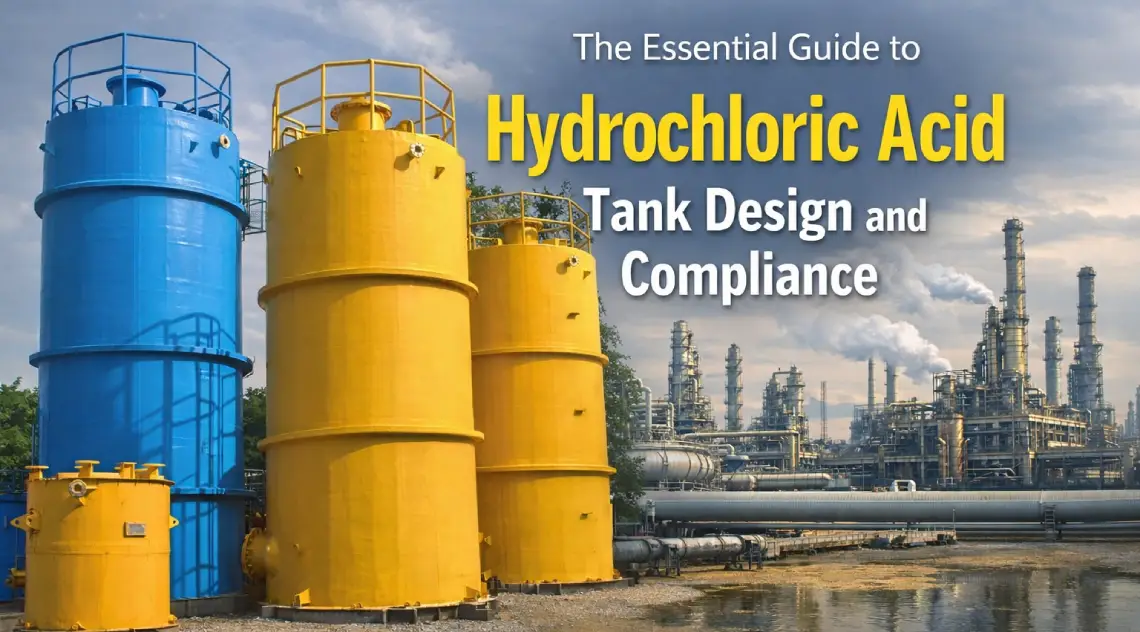
Hydrochloric Acid Storage Tanks
Industrial chemistry demands precision, especially when handling aggressive media. Hydrochloric acid (HCl) is a fundamental reagent in countless processes, from steel manufacturing to water treatment. However, its highly corrosive nature means that storage is never a generic affair. A failure in design leads to environmental disasters and operational shutdowns. Therefore, understanding the interplay between engineering and regulation is vital. This guide explores the critical aspects of Hydrochloric Acid Storage Tanks. We at UK Enviro Systems believe that compliance starts with smart design. Your tank must protect your team, your facility, and the surrounding ecosystem.
The Regulatory Landscape for Acid Storage
Compliance is not just about following a checklist. It is about understanding the risks and mitigating them according to established laws. Various international and local codes govern the storage of hazardous chemicals.
Understanding EPA and Local Environmental Laws
In most regions, environmental protection agencies mandate secondary containment. The goal is simple: prevent any acid from reaching the soil or groundwater. These regulations often require that the containment system hold 110% of the tank’s total volume. They also require compatibility. The containment material must resist the acid just as well as the tank itself.
OSHA and Worker Safety Standards
Worker safety drives many design decisions. Regulations dictate clear access ways, emergency shower placements, and proper ventilation around the tank area. They also require labeling. Every HCL Acid Storage Tanks installation must have visible placards identifying the contents and the hazards. Compliance here protects your most valuable asset: your people.
Material Science: The Foundation of Compliance
You cannot achieve compliance without the right materials. The tank material must withstand chemical attack for its entire intended service life.
Why FRP Dominates HCl Storage
Fiber-Reinforced Plastic (FRP) is the industry standard for a reason. Metals corrode rapidly when exposed to HCl. FRP, however, offers a chemically inert barrier. The key lies in the resin matrix. The resin protects the glass fibers from the acid. If the acid reaches the glass, it wicks along the fibers and destroys the structure. Therefore, the resin selection is paramount.
The Role of Vinyl Ester Resins
For HCL Storage Tanks, vinyl ester resins are the preferred choice. They offer superior resistance to hydrochloric acid compared to polyesters. They also provide excellent toughness and flexibility. This flexibility helps the tank withstand thermal cycling and minor impacts. When specifying your tank, always demand a resin system proven for your specific acid concentration and temperature.
Critical Design Parameters for Compliance
Design goes beyond picking a material. It involves calculating stresses and planning for contingencies.
Pressure and Vacuum Management
A tank is not a sealed box. During pump-out, the liquid level drops. Without proper venting, this creates a vacuum that can collapse the tank. Conversely, vapor pressure from the acid can build up and rupture the tank. Your design must include adequately sized vents. For fume control, consider a scrubber or a conservation vent. These devices allow the tank to breathe while minimizing emissions.
Thermal Expansion Considerations
FRP expands and contracts with temperature changes. The coefficient of thermal expansion for FRP differs from that of steel pipes. If you connect a steel pipe rigidly to an FRP nozzle, temperature changes can crack the tank fitting. You must design flexible connections. These connections absorb the movement without stressing the tank wall. This detail is crucial for long-term integrity.
The Anatomy of a Compliant Tank
A compliant tank features specific structural elements. Each part serves a purpose in maintaining safety and durability.
The Corrosion Barrier
The inner surface of the tank is a resin-rich layer. This layer, often called the “corrosion barrier,” contains no glass fibers on the immediate surface. Instead, it uses a synthetic veil. This veil prevents capillary action. If a surface crack occurs, the veil stops it from penetrating deeper. The thickness of this barrier is a key specification. For aggressive Hydrochloric Acid Storage Tanks, this barrier must be robust.
The Structural Layer
Behind the corrosion barrier lies the structural laminate. This layer uses glass fibers for strength. It bears the hydrostatic load of the liquid. The number of layers and the type of glass determine the tank’s wall thickness. Engineers calculate this based on the tank’s diameter, height, and the specific gravity of the acid. This layer ensures the tank does not bulge or rupture under pressure.
Secondary Containment Systems
We already mentioned regulations require containment. However, the design of that containment is just as important as the tank itself.
Integral vs. Remote Containment
Some tanks feature an integral containment base. The tank sits inside a larger basin molded as part of the assembly. This is common for smaller tanks. For larger Horizontal HCl Tanks, remote containment is typical. This involves a concrete or lined steel dike surrounding the tank. The floor of the dike must slope to a collection point. This allows you to pump out any spilled acid safely.
Lining Materials for Concrete Dikes
Concrete is porous. Acid will eat through bare concrete quickly. You must line the dike with a protective membrane. This can be a spray-on application of the same resin used in the tank. Alternatively, you can use a sheet lining of thermoplastic. The lining must extend up the dike walls to the maximum containment height. It must also be chemically resistant to HCl.
Fittings and Nozzle Design
Leaks often occur at the points where pipes enter the tank. Proper nozzle design prevents this.
Flange Standards and Materials
All nozzles should have integral flanges. This means the flange is molded as part of the tank wall, not attached later. The flange face must be flat and smooth. It requires a gasket to create a seal. For HCl, you should use a gasket made of expanded PTFE. This material resists the acid and conforms to flange imperfections under pressure.
Nozzle Reinforcement
The area around a nozzle is a stress point. The weight of a valve or a pipe can exert significant force. You must reinforce this area with extra layers of glass during fabrication. Alternatively, you can support the pipe independently. Never let the tank nozzle bear the weight of heavy piping. This simple rule prevents most fitting failures.
Customization for Specific Needs
Every facility has unique constraints. A one-size-fits-all approach rarely works for complex chemical processes.
Vertical vs. Horizontal Configurations
Space often dictates the tank shape. Vertical tanks use less floor space. They are ideal for tight indoor locations. Horizontal tanks offer a lower profile. They are easier to access for top-entry mixing or maintenance. When you work with HCL Storage Tanks Customized Suppliers, you can choose the orientation that fits your site perfectly.
Special Access Requirements
Do you need a manway for entry? Most compliant tanks include a manway for internal inspections. Do you need sight glasses or level gauges? These require additional nozzles. Customization allows you to integrate all the instrumentation you need. It ensures you can operate the tank safely and monitor its contents accurately.
The Role of the Manufacturer in Compliance
You cannot design and build a compliant tank alone. You need a partner with deep expertise.
Engineering Certifications
A reputable HCL Storage Tank Manufacturers provides engineering calculations. They will certify that the tank meets the specified design codes. These codes might include ASME RTP-1 or ASTM standards. These certifications provide third-party verification of the tank’s integrity. They are essential for insurance and regulatory audits.
Quality Control Processes
Compliance requires traceability. The manufacturer should document every step. They should record the resin batch numbers. They should verify the laminate thickness during fabrication. They should perform spark testing on the corrosion barrier. This documentation proves that the tank was built correctly. It becomes part of your permanent compliance record.
Installation and Commissioning
A well-designed tank fails if installed poorly. Proper installation is the final step in ensuring compliance.
Foundation Requirements
The tank must sit on a flat, level foundation. The foundation must support the full weight of the tank when filled with acid. For vertical tanks, a concrete slab is standard. For horizontal tanks, you need saddle supports. The supports must distribute the load evenly. They must also be made of or coated with acid-resistant material.
Leak Testing Before Service
Before you fill the tank with acid, you should test it with water. Fill the tank to its maximum operating level. Inspect all fittings and seams for leaks. This hydrostatic test verifies the integrity of the tank and the piping connections. It is a safe way to catch installation errors before introducing a hazardous chemical.
Maintenance for Long-Term Compliance
Compliance is not a one-time achievement. It requires ongoing vigilance.
Regular Inspection Schedules
You should visually inspect the tank monthly. Look for cracks, discoloration, or signs of leaking. You should also schedule a internal inspection every few years. This requires emptying and cleaning the tank. A qualified inspector can then assess the condition of the inner corrosion barrier.
Keeping Maintenance Records
Document every inspection and repair. These records demonstrate due diligence to regulators. They also help you track the tank’s condition over time. If you notice the corrosion barrier thinning, you can plan for replacement. Proactive maintenance prevents unexpected failures.
Conclusion
Designing and maintaining compliant Hydrochloric Acid Storage Tanks is a complex but manageable task. It requires a thorough understanding of materials, engineering principles, and regulatory requirements. You must start with the right resin system. You must ensure proper venting and secondary containment. You must pay attention to the details of fittings and supports. By partnering with an experienced manufacturer like UK Enviro Systems, you gain access to expertise that simplifies this process. We build tanks that not only store acid safely but also stand up to regulatory scrutiny. Remember, compliance is not a burden. It is the foundation of safe, sustainable, and successful industrial operations. Invest in the right design today, and secure your facility for years to come.