
Why FRP is the Best Material for Chemical Storage Tanks
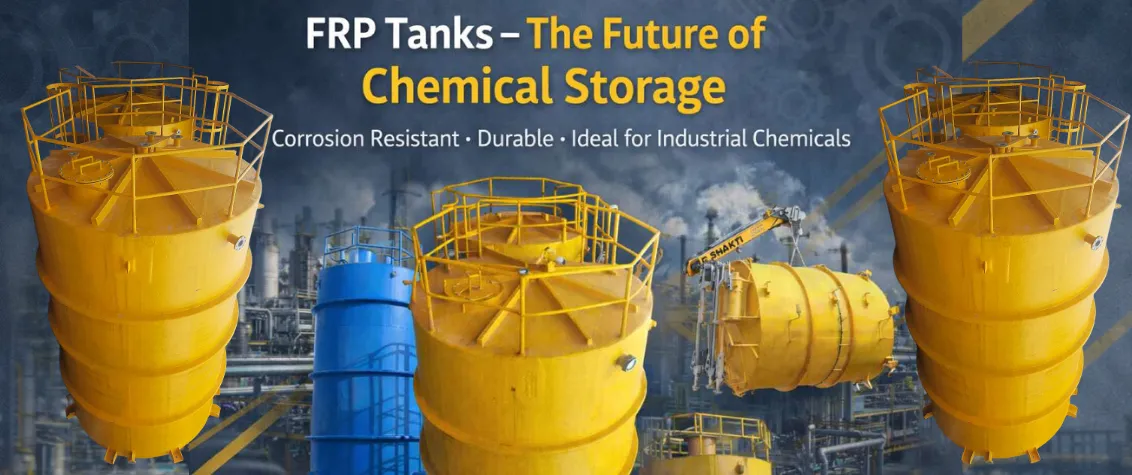
In the demanding world of industrial processing, selecting the right containment solution is a critical decision. The integrity of your operation often hinges on the reliability of your storage infrastructure. When exploring the Benefits of FRP Tanks, it becomes clear why they have become the preferred choice for engineers and plant managers globally. At UK Enviro Systems, we are dedicated to delivering top-quality FRP Tanks to industries worldwide, ensuring that hazardous and corrosive materials are stored safely and efficiently. Unlike traditional materials that succumb to rust or chemical attack, Fiberglass Reinforced Plastic offers a superior alternative for modern industry.
Understanding the Limitations of Traditional Materials
For decades, facilities relied on materials like carbon steel, stainless steel, and rubber-lined steel for their Chemical Storage Tanks. However, these options come with significant drawbacks. Steel is heavy, difficult to install, and highly susceptible to corrosion. Even stainless steel can fail when exposed to chlorides or strong acids over time. The maintenance costs associated with repairing or replacing corroded metal tanks are substantial. This reality has driven a major shift toward composite materials that are engineered to last.
The Corrosion Resistance Factor
The foremost advantage lies in the inherent corrosion resistance of composites. FRP is specifically engineered to withstand a wide range of aggressive chemicals. Whether you are storing sulfuric acid, sodium hydroxide, or harsh solvents, the resin matrix of the tank acts as a barrier. It does not rust, pit, or scale. This inert nature ensures that the purity of the contents remains uncompromised. For this reason, leading Acid Storage Tanks Manufacturers now exclusively recommend FRP for highly aggressive environments.
Exploring the Key Benefits of FRP Tanks
To fully appreciate why this material dominates the market, we must break down the specific Benefits of FRP Tanks. These advantages impact everything from your initial capital outlay to your long-term operational safety.
Exceptional Strength-to-Weight Ratio
FRP is remarkably strong yet lightweight. A comparable steel tank would weigh significantly more. This characteristic simplifies transportation and installation. You often require less heavy lifting equipment on-site. This reduces logistical costs and installation time. Despite being light, the material does not sacrifice structural integrity. It handles high pressures and loads efficiently.
Design Flexibility for Specific Needs
Metal tanks are often limited to standard shapes and sizes. FRP offers immense design flexibility. Manufacturers can customize the tank dimensions to fit tight spaces. They can also integrate nozzles, baffles, and supports exactly where you need them. This tailor-made approach ensures the tank fits your process perfectly. It eliminates the need for costly adaptations later on. As a leading entity among Chemical Storage Tank Manufacturers, we utilize this flexibility to solve unique client challenges.
Long-Term Cost-Effectiveness
While the initial purchase price might be competitive with stainless steel, the total cost of ownership is where FRP truly shines. The reduced need for maintenance is a huge financial benefit. You avoid the recurring costs of repainting, lining repairs, or anode replacements. The operational lifespan of a well-built FRP tank often exceeds that of its metallic counterparts. This longevity makes it the most economical choice for permanent infrastructure.
Thermal Insulation Properties
Many chemical processes require maintaining specific temperatures. FRP naturally provides better thermal insulation than steel. This helps in reducing heat loss. It minimizes the energy required for heating or cooling the stored contents. This property also reduces the risk of condensation on the outer walls, which can be a safety hazard in certain environments.
Why FRP Excels for Specific Chemical Containment
Different chemicals present different challenges. FRP is unique because it can be formulated to resist very specific threats. This adaptability is particularly evident when discussing HCL Storage Tanks.
Storing Hydrochloric Acid Safely
Hydrochloric acid is notoriously aggressive. It attacks most metals instantly. Even high-grade alloys struggle with its corrosive vapors. FRP, however, handles HCL with ease when constructed with a suitable resin-rich liner. The inner surface acts as a durable barrier. It prevents the acid from wicking into the structural fibers. This ensures the tank maintains its strength over years of service. This makes FRP the default material for HCL Storage Tanks in the chemical processing industry.
Handling Oxidizing Acids
Storing strong oxidizing agents like nitric or chromic acid requires special consideration. Standard polyesters may not be sufficient. However, advanced FRP formulations utilize vinyl ester or other specialized resins. These provide the high level of resistance needed for such aggressive media. This versatility proves that FRP is not a one-size-fits-all solution. It is a customizable material platform. That is why many Acid Storage Tanks Manufacturers focus heavily on resin selection during the design phase.
The Manufacturing Precision of FRP Tanks
The performance of your tank depends heavily on the quality of its construction. A poorly manufactured tank will fail regardless of the material’s theoretical properties. This is why partnering with experienced Chemical Storage Tank Manufacturers is essential.
The Filament Winding Process
Most high-quality FRP tanks are made using a process called filament winding. Continuous glass fibers are saturated with resin. They are then wound precisely around a rotating mandrel. This creates a strong, seamless structure. The orientation of the fibers can be adjusted to maximize strength in specific directions. This engineering precision results in a tank that can withstand high internal pressures and external loads.
The Importance of the Corrosion Barrier
A critical component of any FRP tank is the internal corrosion barrier. This is a resin-rich layer on the inside surface. It contains a high percentage of resin and is reinforced with a synthetic veil. This layer protects the structural filaments from chemical attack. Without a properly constructed barrier, the tank’s lifespan would be drastically reduced. Reputable Chemical Storage Tank Manufacturers pay meticulous attention to this layer to guarantee long-term durability.
Safety and Environmental Compliance
Safety is non-negotiable in chemical handling. FRP contributes to a safer workplace in several ways. Its non-conductive nature eliminates risks associated with electrical conductivity. It also generates no sparks upon impact, which is vital in flammable environments.
Containment and Leak Prevention
Modern FRP tanks can be built as double-walled units. This provides built-in secondary containment. If the inner wall ever develops a leak, the outer wall captures the fluid. This prevents soil contamination and groundwater pollution. This feature is crucial for meeting strict environmental regulations. It gives facility managers peace of mind knowing they have an extra layer of protection.
Installation and Maintenance Simplicity
We have touched on the lightweight nature, but the installation benefits go deeper. FRP tanks often arrive on-site as a single piece, ready to set. There is no need for field welding or complicated assembly. This speeds up project timelines significantly.
Minimal Upkeep Requirements
Once installed, the maintenance regime is simple. Regular visual inspections are usually sufficient. There is no need to apply protective coatings or sacrificial anodes. Cleaning is straightforward due to the smooth internal finish. This smooth surface also prevents chemical buildup or bacterial growth. It ensures that the stored product remains consistent and pure. These factors collectively underscore the Benefits of FRP Tanks for busy plant operators.
Adapting to Harsh Environmental Conditions
Outdoor storage tanks face weather extremes. They must endure UV radiation, freezing temperatures, and high winds. FRP performs admirably in these conditions. UV inhibitors can be added to the resin. This prevents degradation from sunlight. The material also handles thermal cycling well. It expands and contracts at rates that do not cause structural stress.
Seismic and Wind Resistance
In areas prone to earthquakes or hurricanes, the weight of a tank matters. A heavy steel tank exerts massive forces on its foundation during a seismic event. A lighter FRP tank generates lower inertial forces. This makes it easier to anchor and secure. Its high strength also allows it to withstand high wind loads without buckling. This resilience makes it a reliable choice for facilities in challenging geographic locations.
Conclusion: The Intelligent Choice for Modern Industry
The evidence supporting FRP as the premier material for chemical storage is overwhelming. From its unmatched corrosion resistance to its cost-saving longevity, it outperforms traditional materials in nearly every metric. Whether you require standard vessels or custom-engineered solutions for HCL Storage Tanks, the adaptability of FRP is unmatched. At UK Enviro Systems, our commitment as specialist Acid Storage Tanks Manufacturers is to provide containment solutions that protect your investment and your team. By choosing FRP, you are not just buying a tank. You are investing in decades of reliable, worry-free service. The Benefits of FRP Tanks are clear: they represent the pinnacle of safety, efficiency, and durability in chemical storage. When you plan your next project, consider the composite advantage. It is the intelligent choice for a sustainable and profitable future.