
NAOH Storage Tanks
NAOH Storage Tank Manufacturers in India
As a trusted name among NAOH Storage Tank Manufacturers, we deliver durable and safe storage solutions for sodium hydroxide. Our FRP NAOH Storage Tanks resist corrosion and ensure long service life. Many industries rely on our expertise for chemical containment.
What is an NAOH Storage Tank?
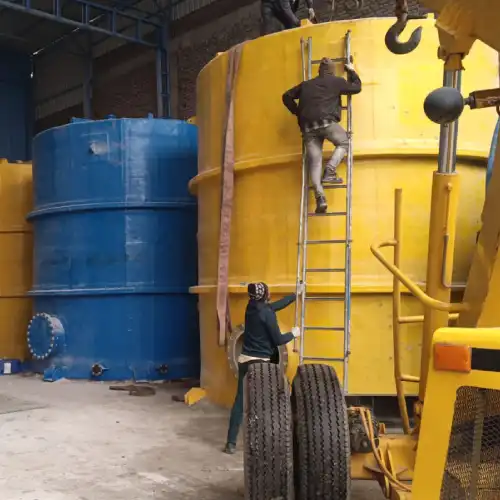
An NAOH storage tank holds sodium hydroxide, a powerful alkaline chemical. This chemical is also called caustic soda. Industries use it for cleaning, processing, and manufacturing. NAOH Chemical Storage Tank designs must resist high pH levels. Therefore, the tank material requires exceptional chemical resistance.
For instance, steel tanks corrode quickly with sodium hydroxide. Consequently, manufacturers turn to composite materials. Our Industrial NAOH Tank Manufacturers team builds tanks specifically for this harsh chemical. Each tank prevents leaks and maintains structural integrity. Additionally, we offer both vertical and horizontal configurations.
Key Characteristics of NAOH Tanks
High resistance to alkaline corrosion
Seamless inner surface for easy cleaning
Temperature tolerance up to 80°C
Customizable sizes from 500 to 50,000 liters
Moreover, a proper NAOH storage tank includes safety vents and level indicators. These features prevent overfilling and pressure buildup. As a result, operators handle sodium hydroxide without risk.
Why FRP is Ideal for Sodium Hydroxide Storage
FRP NAOH Storage Tanks provide unmatched performance for caustic soda. FRP means fiber-reinforced plastic. This material does not react with sodium hydroxide. Hence, it maintains purity of the stored chemical. Steel alternatives develop pitting and cracks within months. In contrast, FRP lasts for decades.
Corrosion Resistance Benefits
FRP composites have a resin-rich inner layer. This layer blocks chemical penetration. Therefore, FRP Sodium Hydroxide Storage Tank Suppliers recommend FRP for concentrations up to 50%. Even at elevated temperatures, FRP remains stable. Additionally, FRP is lightweight compared to metal. This property reduces foundation costs.
Comparison with Other Materials
Material Comparison – NaOH Storage Tanks (Transparent Table)
| Material | Resistance to NaOH | Lifespan | Cost |
|---|---|---|---|
| Mild Steel | Poor (rapid corrosion) | 1–2 years | Low initial (high replacement) |
| Stainless Steel | Moderate (pitting risk) | 5–7 years | High |
| FRP (Fiber-Reinforced Plastic) | Excellent – no reaction | 15–20 years | Medium / ROI-driven |
✅ FRP outperforms both mild steel and stainless steel for sodium hydroxide storage – lower long-term cost & superior chemical resistance.
FRP composites have a resin-rich inner layer. This layer blocks chemical penetration. Therefore, FRP Sodium Hydroxide Storage Tank Suppliers recommend FRP for concentrations up to 50%. Even at elevated temperatures, FRP remains stable. Additionally, FRP is lightweight compared to metal. This property reduces foundation costs.
Call Now:
Partner with India’s Leading FRP NAOH Storage Tank Manufacturers in Ghaziabad
At UK Enviro Systems Pvt. Ltd., we combine 20+ years of engineering excellence with sustainable innovation. Ultimately, our FRP Tanks outperform competitors in lifespan, safety, and ROI—proven by 500+ installations across 35 countries.
Applications of NaOH Storage Tanks
Sodium Hydroxide Storage Solution tanks appear in many sectors. Firstly, the pulp and paper industry uses NaOH for delignification. Secondly, textile mills apply it for mercerization. Thirdly, soap and detergent manufacturers depend on caustic soda. Additionally, water treatment plants use NaOH for pH adjustment.
Industrial Use Cases
Chemical Processing: As a reactant for sodium salts
Petroleum Refining: To remove acidic impurities
Aluminum Production: For dissolving bauxite ore
Food Industry: For peeling fruits and washing bottles
Consequently, each application demands reliable Heavy Duty NAOH Tanks. Our designs handle continuous filling and emptying cycles. For example, a paper mill stores 30,000 liters of 45% NaOH. Our vertical FRP tank performs flawlessly for years.
Vertical vs Horizontal Configurations
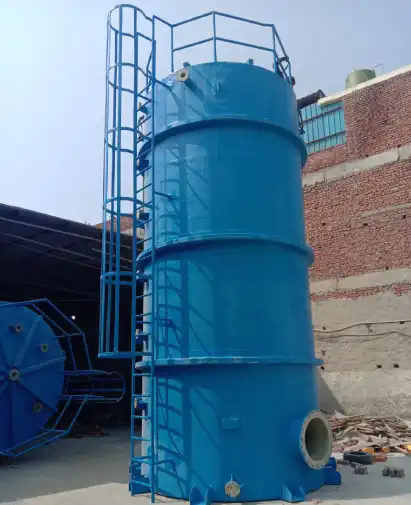
Vertical NAOH Storage Tanks save floor space. They suit small facilities with limited area. Horizontal NAOH Tanks work well for low-clearance buildings. Horizontal designs also allow easier gravity discharge. Choose based on your site layout and pumping system.
Features of High-Quality FRP Tanks
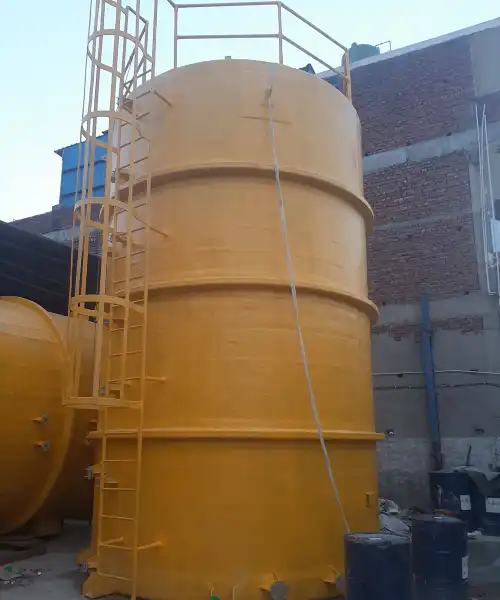
Top-tier Buy NAOH Storage Tanks from us and get these essential features. Each tank undergoes rigorous quality checks. Transitioning to FRP brings multiple advantages.
Leak Proof Construction
Leak Proof NAOH Storage Tanks use monolithic joints. No welds or seams exist in the wetted area. Hence, leaks cannot develop. We also perform spark testing on every tank. This test detects pin holes instantly.
UV Resistance
Outdoor installations need UV protection. Our FRP tanks contain UV inhibitors in the outer layer. Therefore, sunlight does not degrade the material. Even after ten years, the surface remains intact.
Custom Nozzles and Fittings
We add inlet, outlet, drain, and vent nozzles as per your drawing. Similarly, we install manways for internal cleaning. All fittings integrate into the tank structure. This approach eliminates post-fabrication drilling, which could create weak points.
Temperature and Pressure Ratings
Standard tanks handle up to 80°C and atmospheric pressure. For higher temperatures, we use special resins. As a result, our tanks suit hot caustic soda transfer lines.
Advantages of Choosing UK Enviro Systems
As a leading NAOH Tank Manufacturer Company, we prioritize quality and safety. Our experience spans over two decades. Many engineers trust us for PP FRP NAOH Storage Tanks. PP (polypropylene) lining adds chemical resistance while FRP provides strength.
Why Partner with Us?
In-house engineering: We design and fabricate under one roof.
Fast turnaround: Standard tanks ship in 4 weeks.
Third-party certifications: Our tanks meet ISO and ASTM standards.
After-sales support: We offer installation guidance and annual inspections.
Additionally, we provide NAOH Handling And Storage Systems including pumps, pipes, and secondary containment. This complete solution simplifies your procurement. Instead of dealing with multiple vendors, you work with one accountable partner.
Export Quality Standards
Our tanks reach clients in the Middle East, Africa, and Southeast Asia. Each unit meets international shipping requirements. Consequently, you receive Export Quality Storage Solutions without delays.
Call Now:
Request a Custom Quote Today – Tell us your capacity and site conditions. We will design the perfect NaOH storage tank for you.
Safety Standards for Chemical Storage
Safe storage of sodium hydroxide prevents injuries and environmental harm. Therefore, follow these standards when installing NAOH Handling And Storage Systems.
Secondary Containment
Place the tank inside a bund or dike. The bund must hold 110% of tank volume. This rule prevents spills from spreading. Moreover, use chemical-resistant coatings on the bund floor.
Personal Protective Equipment (PPE)
Operators must wear gloves, goggles, and aprons when near the tank. Additionally, install an emergency shower nearby. This equipment washes off accidental splashes immediately.
Venting Requirements
NaOH tanks require venting to avoid vacuum or pressure buildup. Use a gooseneck vent or a conservation vent. Both options keep moisture out. Meanwhile, they allow air to escape during filling.
Inspection Frequency
Check tank exterior monthly for cracks or blisters. Inspect fittings and gaskets every six months. Replace any worn part before it fails. As a result, your Leak Proof NAOH Storage Tanks stay truly leak-proof.
How to Select the Right Tank Capacity
Choosing capacity requires careful calculation. Industrial NAOH Tank Manufacturers like us help you size the tank correctly. Follow these steps.
Step 1 – Determine Daily Consumption: Calculate how many liters of NaOH your process uses per day. For example, a textile unit uses 2,000 liters daily.
Step 2 – Decide Storage Days: Store enough for 7 to 14 days of consumption. This buffer accounts for supply delays. Using the example above, 14 days means 28,000 liters.
Step 3 – Add Safety Margin: Add 10% extra capacity. Therefore, 28,000 liters becomes 30,800 liters. The nearest standard size is 35,000 liters.
Step 4 – Choose Orientation: For 35,000 liters, a vertical tank needs 3.5 meters diameter and 4 meters height. A horizontal tank needs 11 meters length and 2.5 meters diameter. Select based on available space.
Step 5 – Consider Future Expansion: If production will increase, order a larger tank now. Adding capacity later costs more. Hence, plan for five years of growth.
Maintenance Tips for NaOH Storage Tanks
Proper maintenance extends tank life. Even the best FRP NAOH Storage Tanks need periodic care. Use this checklist.
Daily Checks
- Verify no liquid on the floor around the tank.
- Listen for unusual sounds from vents.
- Ensure the level indicator moves freely.
Monthly Procedures
Inspect all bolts on access covers.
Clean the vent screen to prevent blockage.
Record the tank wall temperature.
Annual Inspection
Drain and clean the tank completely. Then, perform a visual internal check. Look for blisters, cracks, or color changes. Additionally, conduct a hammer tap test. A dull sound indicates delamination. In that case, call our service team for repair.
Repairing Minor Damage
Small scratches get fixed with resin patching. First, sand the area. Then, apply a fresh resin layer. Finally, cure it with UV light or heat. For larger damage, replace the tank section. NAOH Tank Manufacturer Company should handle major repairs.
[Talk to Our Engineering Team] – Schedule a maintenance audit today. We will inspect your storage system and recommend upgrades.
Conclusion
Selecting the right NAOH Storage Tank Manufacturers ensures safety and efficiency. FRP NAOH Storage Tanks offer the best value for sodium hydroxide applications. From Vertical NAOH Storage Tanks to Horizontal NAOH Tanks, our range covers every need. We also provide PP FRP NAOH Storage Tanks and HDPE Lined NAOH Tanks for extreme conditions.
Remember to follow safety standards and perform regular maintenance. UK Enviro Systems stands ready as your FRP Sodium Hydroxide Storage Tank Suppliers. Our Heavy Duty NAOH Tanks and complete NAOH Handling And Storage Systems simplify your chemical storage challenges.
Contact us now to discuss your project. Get a Customized FRP Tank Design that matches your exact specifications. Trust the experts in Industrial NAOH Tank Manufacturers for a reliable, long-lasting solution.
Our Clients













Get Industrial-Grade FRP NaOH Tanks – Click here for standard price list.
At UK Enviro Systems Pvt. Ltd., we combine 20+ years of engineering excellence with sustainable innovation. Ultimately, our FRP Tanks outperform competitors in lifespan, safety, and ROI—proven by 500+ installations across 35 countries.