
FRP Chemical Tanks for Electroplating Plants: A Complete Guide
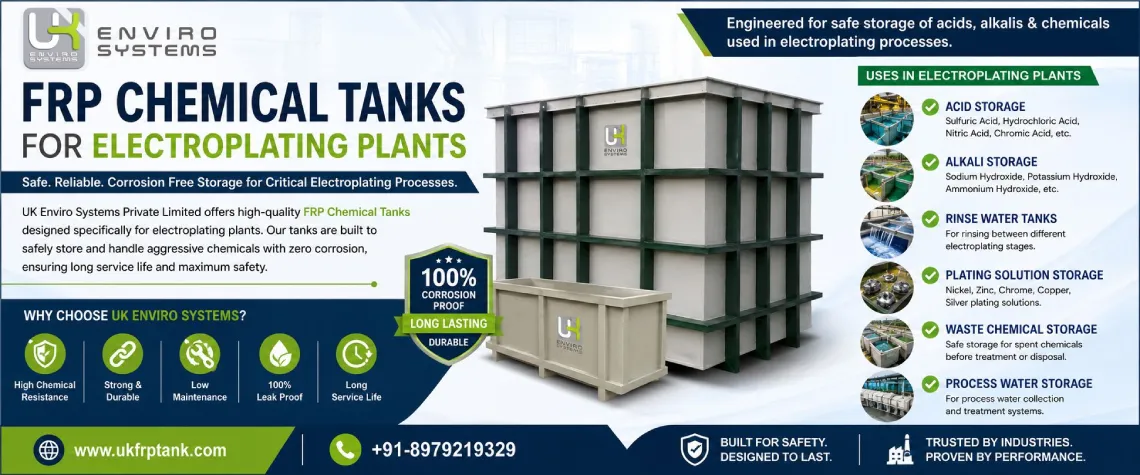
Leading Electroplating Tank Manufacturers know that plant safety depends heavily on tank material quality. At UK Enviro Systems, we build FRP Chemical Tanks that withstand aggressive acids, alkalis, and plating solutions daily. Consequently, our tanks help electroplating units run smoothly without unexpected leaks or corrosion damage. Therefore, choosing between different Electroplating Tank Manufacturers matters more than most operators realize.
Understanding the Electroplating Process and Its Tank Requirements
Electroplating involves dipping metal parts into chemical baths to deposit a protective or decorative metal layer. During this process, tanks constantly contact strong acids, caustic solutions, and heated liquids. As a result, ordinary metal or plastic containers fail quickly under such conditions. Consequently, plants need Industrial Chemical Tanks built from materials that resist corrosion, heat, and chemical attack simultaneously.
What Makes FRP Electroplating Tanks the Preferred Choice?
Composition and Build Quality
Every FRP Electroplating Tank features multiple resin layers bonded with glass fiber matting. Moreover, manufacturers often add a chemical-resistant liner inside the tank wall. This liner protects against direct acid contact, extending tank life significantly. Meanwhile, the outer shell provides structural rigidity, so the tank holds its shape under heavy liquid loads.
Liner Options for Different Chemicals
PP Electroplating Tank vs FRP Electroplating Tank: Which Suits Your Plant?
Many plant owners compare a PP Electroplating Tank against an FRP option before purchasing. Generally, Polypropylene Electroplating Tanks, also called Polypropylene Plating Tank units, offer good chemical resistance at a lower cost. However, FRP Chemical Tanks provide superior structural strength for larger capacities. Consequently, many facilities now choose PP FRP Electroplating Tanks. These combine a polypropylene liner with an FRP outer shell for maximum performance. Both PP Electroplating Tanks and FRP Electroplating Tanks remain popular Electroplating Equipment choices recommended by top Electroplating Tank Manufacturers today.
Key Benefits of FRP Chemical Tanks for Electroplating Plants
Excellent Corrosion Resistance
Since electroplating baths contain aggressive acids, Corrosion Resistant Electroplating Tanks prevent leaks and structural failure. Furthermore, well-built FRP Electroplating Tanks don’t rust like metal tanks, so plants avoid contamination risks entirely.
Long Service Life
Cost-Effective Operation
Although initial investment may seem higher than basic plastic tanks, FRP Chemical Tanks reduce replacement and maintenance costs over time. Therefore, plants save money throughout the tank’s operational lifespan.
Reduced Downtime Advantage
Because FRP tanks rarely crack or leak, plants experience fewer unplanned shutdowns. As a result, production schedules stay consistent and predictable.
Lower Maintenance Frequency
Routine inspection remains simple since FRP surfaces don’t corrode internally, unlike metal alternatives that need frequent recoating.
Applications Across Metal Finishing Industries
Pickling Tanks
Surface Treatment Tanks
Surface Treatment Tanks prepare metal parts for coating or finishing. Meanwhile, FRP walls resist the mixed chemical solutions used during pretreatment stages.
Metal Finishing Tanks
Metal Finishing Tanks handle multiple process steps, including cleaning, rinsing, and plating. Consequently, manufacturers build these Industrial Electroplating Tanks with reinforced walls for continuous daily use.
Galvanizing Tanks and Anodizing Tanks
Both Galvanizing Tanks and Anodizing Tanks require chemical-resistant construction since they involve zinc coating and oxide layer formation respectively. Therefore, FRP remains a trusted material choice for these specialized Electroplating Plant Tanks.
Acid Storage Tank for Electroplating: Safety Considerations
An Acid Storage Tank for Electroplating must handle concentrated chemicals without degradation. Additionally, proper venting and secondary containment reduce spill risks significantly. At UK Enviro Systems, we design Chemical Electroplating Tanks meeting strict safety standards for hazardous chemical handling.
Choosing Reliable Electroplating Tank Suppliers
Selecting among Electroplating Tank Suppliers requires careful evaluation of manufacturing standards. Consequently, buyers should verify certifications, material quality, and customization capabilities before finalizing any order. Reputable Electroplating Tank Manufacturers will readily share test reports and past project references.
Questions to Ask Electroplating Tank Exporters
Before importing tanks, ask Electroplating Tank Exporters about resin type, liner thickness, and warranty terms. Furthermore, request references from existing clients operating similar Electroplating Tank setups.
Why UK Enviro Systems Leads Among Electroplating Equipment Manufacturers
As experienced Electroplating Equipment Manufacturers, we combine engineering expertise with strict quality control. Moreover, our Industrial Electroplating Tanks undergo rigorous testing before delivery. Therefore, clients trust our Chemical Process Tanks for demanding industrial environments worldwide. As a result, they consistently return to our Electroplating Tank Manufacturers team for repeat orders.
Conclusion
Choosing the right tank material protects your electroplating operations from costly downtime and safety hazards. As trusted Electroplating Tank Manufacturers, UK Enviro Systems delivers durable, corrosion-resistant FRP Electroplating Tanks built for demanding industrial environments. Contact us today to discuss your Electroplating Tank Manufacturers requirements.
Frequently Asked Questions
FRP and polypropylene both perform well, though FRP offers greater structural strength for larger tanks.
With proper maintenance, these tanks typically last between 15 and 25 years.
Yes, manufacturers select appropriate liners based on the specific acid or chemical used in each process.
Generally, PP tanks cost less initially, though FRP tanks often provide better long-term value.
Yes, as experienced Electroplating Tank Manufacturers, we design tanks according to each client's specific dimensional and chemical requirements.