
High Maintenance Tank Issues? FRP Tanks Solve It
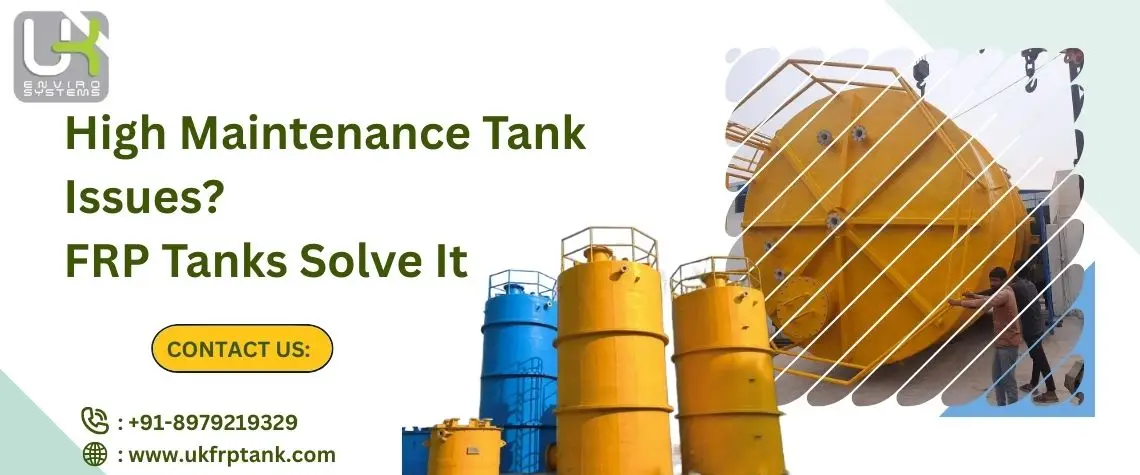
Tired of tank troubles? Many industrial facilities are plagued by constant repairs and short lifespans. Traditional metal and concrete tanks often fail due to corrosion, leaks, and heavy maintenance schedules. That’s where superior engineering comes into play. Leading FRP Tank Manufacturers in Neemrana are now providing a robust solution designed to outlast traditional options. Fiber Reinforced Plastic (FRP) technology effectively eliminates common problems like rust and chemical degradation. For businesses managing aggressive chemicals, switching to advanced storage means saying goodbye to downtime. It’s a long-term investment in safety and reliability.
Common High-Maintenance Issues with Traditional Tanks
1. Corrosion – The Biggest Enemy of Metal Tanks: Metal tanks, especially those storing acids, alkalis, or chemicals, are highly prone to corrosion. Over time, rust weakens the structure, leading to leaks and contamination. Regular repainting, protective coatings, and replacements become necessary, increasing operational costs.
How FRP Tanks Solve It: FRP tanks are inherently corrosion-resistant, making them ideal for storing aggressive chemicals like hydrochloric acid (HCL), sulfuric acid, and other corrosive substances. As leading FRP Tank Manufacturers in Neemrana, we ensure our tanks withstand harsh environments without deteriorating.
2. Frequent Leakage & Structural Damage: Concrete and steel tanks often develop cracks and leaks due to thermal expansion, ground movement, or chemical reactions. Leakage not only leads to product loss but also poses environmental and safety hazards.
How FRP Tanks Solve It: FRP tanks are seamless and flexible, preventing cracks even under extreme conditions. Their high tensile strength ensures durability, eliminating the risk of leaks. Industries relying on Chemical Storage Tanks in Neemrana benefit from FRP’s leak-proof design.
3. High Maintenance & Repair Costs: Traditional tanks require regular inspections, coatings, and part replacements. The downtime for maintenance disrupts operations and increases expenses.
How FRP Tanks Solve It: FRP tanks are virtually maintenance-free. Unlike metal tanks, they don’t need anti-rust treatments or frequent welding repairs. This reduces long-term costs significantly.
4. Poor Chemical Resistance Leading to Contamination: Many materials react with stored chemicals, leading to contamination. For example, metal tanks can corrode when storing hydrochloric acid, compromising product purity.
How FRP Tanks Solve It: FRP is chemically inert, ensuring no reactions with stored substances. This makes them perfect for HCL Storage Tanks and other sensitive chemical applications.
5. Heavyweight & Installation Challenges: Steel and concrete tanks are heavy, requiring strong foundations and cranes for installation. This increases project costs and complexity.
How FRP Tanks Solve It: FRP tanks are lightweight yet strong, making transportation and installation easier. They can be customized on-site, reducing logistical challenges.
Why Choose FRP Tanks for Industrial Storage?
- Long Lifespan with Minimal Upkeep: FRP tanks last decades without significant wear and tear, unlike metal tanks that degrade quickly. This makes them a cost-effective investment for industries.
- Customizable for Specific Needs: As expert FRP Tank Manufacturers in Neemrana, we design tanks in various sizes, shapes, and specifications. Whether you need Acid Storage Tanks in Neemranaor large Chemical Storage Tanks, FRP can be tailored to your requirements.
- Safe for Hazardous Chemicals: FRP’s non-reactive nature ensures safe storage of aggressive chemicals, reducing risks of spills, contamination, and workplace hazards.
- UV & Weather Resistance: Outdoor storage tanks face sun exposure and temperature fluctuations. FRP tanks are UV-stabilized, preventing degradation from sunlight and extreme weather.
- Eco-Friendly & Sustainable: FRP tanks are recyclable and don’t release toxic substances, making them an environmentally responsible choice.
Applications of FRP Tanks in Key Industries
- Chemical Processing Plants
- Storage of acids, alkalis, and solvents
- Safe containment of HCL Storage Tanks and sulfuric acid
- Water & Wastewater Treatment
- Chlorine storage
- Effluent treatment tanks
- Pharmaceutical & Food Industries
- Hygienic storage of liquids
- Corrosion-free solutions for sensitive ingredients
- Oil & Gas Sector
- Fuel storage
- Corrosion-resistant piping and containment
Conclusion: FRP Tanks – The Smart Choice for Low-Maintenance Storage
If you’re tired of dealing with rust, leaks, and high maintenance costs, switching to FRP tanks is the best decision. As trusted FRP Tank Manufacturers, UK Enviro Systems delivers top-quality Acid Storage Tanks in Neemrana, Chemical Storage Tanks, and HCL Storage Tanks designed for durability and efficiency.
Say goodbye to frequent repairs and hello to a long-lasting, cost-effective storage solution. Contact us today to get the best FRP tanks tailored to your industrial needs!
FAQ: Everything You Need to Know About FRP Tanks
Metal tanks degrade primarily due to electrochemical corrosion from stored chemicals and moisture. This rusting weakens structural integrity over time, leading to pinhole leaks, costly repairs, and eventual replacement.
Yes. Unlike brittle concrete, FRP has high tensile strength and flexibility. It absorbs vibration and shock without cracking, making it durable against ground shifts or accidental collisions.
No. Due to their lightweight yet strong composition, FRP tanks reduce the need for heavy, expensive foundations. This simplifies logistics and lowers overall project setup costs.
High-quality FRP tanks are manufactured with UV-stabilized resins. This prevents surface chalking and degradation from direct sunlight, ensuring weather resistance for outdoor storage.
Absolutely. FRP is chemically inert and non-toxic. It does not leach contaminants into stored liquids, ensuring hygienic conditions suitable for pharmaceutical and food processing industries.