
Complete Guide to Industrial Brine FRP Tanks for Water Softener
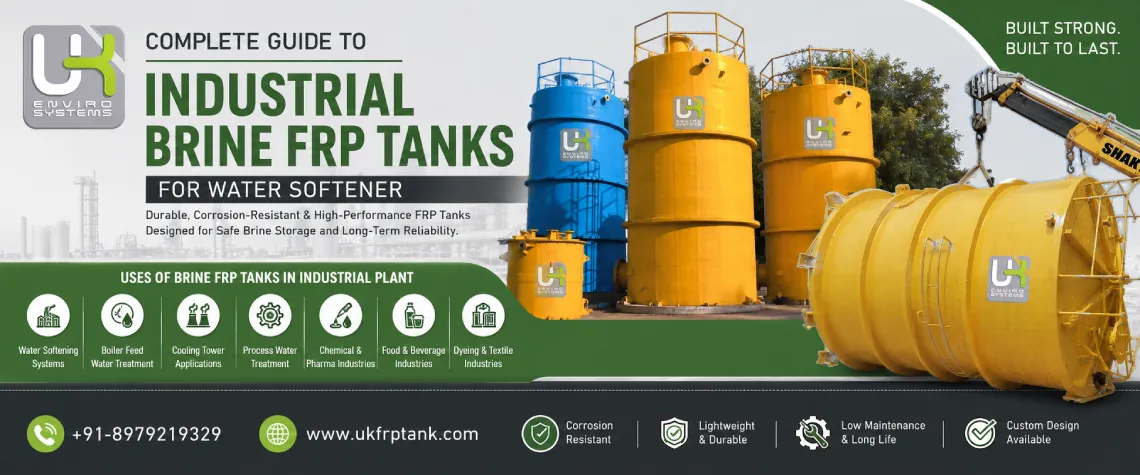
Brine FRP Tanks for Water Softener systems play a critical role in industrial water treatment. These tanks store sodium chloride solutions. They enable effective resin regeneration in softeners. Engineers rely on these vessels for consistent performance. This guide explores every technical aspect. You will learn about materials, design, and maintenance.
Understanding Brine Solutions in Industrial Water Softening
Industrial water softening requires a concentrated salt solution. This solution regenerates ion exchange resins. The process removes hardness minerals like calcium. Magnesium also gets eliminated effectively. Brine solutions typically contain 10% to 26% sodium chloride. Concentrations vary by application. Higher purity salts reduce impurities. Impurities can foul resin beds. Therefore, proper brine storage becomes essential.
Brine chemistry presents aggressive conditions. Chloride ions cause pitting in metals. Traditional steel tanks corrode rapidly. Even stainless steel suffers stress corrosion cracking. Thus, material selection determines system longevity. Engineers choose fiberglass reinforced plastic (FRP) for this reason. FRP resists chloride attack exceptionally well.
Corrosion Behavior of Sodium Chloride
Sodium chloride solutions accelerate galvanic corrosion. Wet brine creates electrolytic cells. Metal ions dissolve into the solution. This process thins tank walls over time. Pinhole leaks develop unexpectedly. FRP eliminates this electrochemical pathway. The polymer matrix seals the surface completely. Glass fibers provide structural reinforcement. No metallic components contact the brine. Consequently, corrosion becomes a non-issue.
Material Science Behind FRP for Brine Service
FRP composites combine two primary materials. A thermosetting resin forms the matrix. Glass fibers deliver tensile strength. The resin protects fibers from chemical attack. Isophthalic polyester resins perform well. Vinyl ester resins offer superior resistance. For extreme conditions, epoxy vinyl esters work best. Each resin type has distinct properties.
Resin Selection Criteria
First, consider the brine temperature. Standard operations run from 5°C to 50°C. Isophthalic polyester handles this range well. Second, evaluate salt purity. Industrial grades contain trace oxidizers. Oxidizers degrade some resins. Vinyl ester resists oxidation better. Third, check cyclic loading frequency. Daily regeneration cycles stress the tank. Flexible resins absorb mechanical fatigue. Vinyl ester maintains elasticity over time.
Glass Fiber Reinforcement
E-glass fibers dominate FRP brine tanks. They provide high tensile modulus. The fiber orientation matters significantly. Filament winding aligns fibers at specific angles. Helical windings handle hoop stresses. Longitudinal fibers manage axial loads. Chopped strand mats add isotropic strength. Multiple layers create redundancy. Fiber volume fraction reaches 35% to 45%. Higher fractions increase strength but reduce corrosion resistance. Optimized designs balance both parameters.
Design Parameters for Brine FRP Tanks for Water Softener
Proper engineering ensures decades of service. Brine FRP Tanks for Water Softener follow strict design codes. ASME RTP-1 governs many installations. BS 4994 provides alternative guidelines. Each standard specifies safety factors. Minimum factor of safety is 6 for burst pressure. Working pressure ranges from atmospheric to 50 psi. Most brine tanks operate at atmospheric pressure. However, pumped systems require pressure ratings.
Wall Thickness Calculations
Engineers calculate minimum wall thickness. The formula considers diameter and hydrostatic head. For a 6-foot diameter tank, thickness often exceeds 0.25 inches. Higher heads demand thicker walls. Corrosion allowance adds extra material. FRP does not corrode chemically. However, erosion from salt crystals occurs. Therefore, add 0.05 inches for abrasion resistance. Finite element analysis verifies stress distribution. Critical zones include bottom knuckles. Nozzle penetrations also need reinforcement.
Flange and Nozzle Configurations
Top manways allow inspection access. Standard diameters range 18 to 24 inches. Bottom outlets require full drain capability. Nozzle sizes match pump suction lines. Typical connections are 2 to 4 inches NPT. Flanged connections use Class 150 drilling. Gaskets must be brine-compatible. EPDM or Viton seals work effectively. Avoid natural rubber products. They degrade in concentrated salt solutions.
Internal Baffles and Mixing Devices
Crystallization presents a major challenge. Salt settles at the tank bottom. Without mixing, saturation decreases. Internal baffles promote solution uniformity. Recirculation nozzles create gentle flow. Some designs include eductor systems. Compressed air agitation prevents dead zones. Each method ensures consistent brine density. Density should remain within 1.12 to 1.20 g/mL.
Role of Brine Storage Tanks in Regeneration Cycles
Brine Storage Tanks hold prepared salt solution. The water softener draws brine as needed. Regeneration typically occurs every 2 to 7 days. Each cycle consumes 5 to 20 gallons of brine. Larger industrial systems use hundreds of gallons. The tank must replenish between cycles. Saturation rates depend on salt contact time. Undersized tanks cause brine starvation. This leads to incomplete regeneration.
Sizing Guidelines for Brine Storage Tanks
Calculate total brine volume first. Multiply resin volume by regeneration dosage. Standard dosages range 6 to 15 lbs salt per cubic foot. Each pound of salt requires 1.2 gallons of water. Therefore, a 100 cubic foot resin bed needs 720 to 1800 gallons. Add 25% safety margin. Also account for salt storage volume. Wet salt occupies 25% of tank volume. Dry salt requires separate saturators. Most Brine Storage Tanks combine both functions.
Safety Factors in Tank Sizing
Never operate tanks at maximum capacity. Leave 10% ullage space for expansion. Temperature increases cause brine expansion. Coefficient of expansion for brine is 0.0002 per °C. A 30°C rise adds 0.6% volume. While small, repeated overflow damages flooring. Install high-level alarms to prevent spills. Overflow lines must drain to containment.
Industrial Brine Tanks vs. Conventional Tanks
Industrial Brine Tanks differ significantly from standard vessels. They handle daily chemical exposure. Conventional polyethylene tanks degrade in sunlight. FRP resists UV radiation with gel coats. Steel tanks require expensive rubber linings. Linings fail at weld seams. FRP has no welds to corrode. Concrete tanks leach calcium into brine. This contamination reduces softener efficiency. FRP remains chemically inert.
Temperature Extremes Performance
Industrial environments see temperature swings. Winter brine can freeze at -21°C for 23% solutions. Summer temperatures exceed 40°C. FRP maintains mechanical properties across this range. Thermal expansion matches piping materials. Coefficient is 1.5 x 10^-5 per °C. Steel expands at 1.2 x 10^-5. The mismatch causes minimal stress. Polyethylene expands four times more. Therefore, FRP connections stay leak-free.
Fabrication Techniques for FRP Brine Storage Tanks
FRP Brine Storage Tanks use advanced manufacturing. Filament winding dominates cylindrical designs. This method provides precise fiber placement. Computer-controlled machines apply resin continuously. Each pass builds thickness incrementally. Helical windings at 55 degrees optimize hoop strength. Longitudinal windings at 85 degrees add axial capacity. The process repeats until reaching target thickness.
Filament Winding Process Details
First, a mandrel rotates at controlled speed. Fiber strands pass through resin baths. Excess resin removed by wiper rings. Tension controls fiber alignment. Typical tension is 2 to 5 pounds per strand. Multiple strands combine into bands. Band width determines coverage rate. After winding, the assembly cures. Curing temperatures range 150°F to 300°F. Post-curing improves crosslink density.
Hand Lay-Up for Complex Features
Discontinuous sections require hand lay-up. Nozzle reinforcements use chopped strand mat. Workers saturate mat with resin manually. Consolidation rollers remove air bubbles. Each layer cures before adding next. Thick laminates need controlled exotherm. Otherwise, cracking occurs from heat buildup. Final surface receives corrosion barrier. The barrier contains 90% resin by weight. This rich layer blocks chloride penetration.
Curing Protocols for Maximum Performance
Proper curing determines chemical resistance. Under-cured resin absorbs brine. Over-cured resin becomes brittle. Thermocouples monitor exothermic peaks. Peak temperature should not exceed resin’s heat deflection point. Typical cures last 24 hours at ambient. Accelerated cures use 160°F for 4 hours. Post-cure at 200°F for 2 hours. This drives crosslinking to 95% completion.
Chemical Compatibility of Chemical Brine Tanks with Sodium Chloride
Chemical Brine Tanks must resist multiple substances. Sodium chloride is primary. However, industrial salts contain additives. Anti-caking agents like ferrocyanide appear. These compounds are mildly acidic. PH ranges from 6 to 8. Vinyl ester resins handle pH 2 to 12. Isophthalic polyester works from pH 4 to 10. Also consider biocides added to brine. Some facilities use chlorine dioxide. Oxidizing biocides attack standard resins. Upgrade to epoxy vinyl ester for such cases.
Permeation and Blistering Prevention
Osmotic blistering damages many FRP tanks. Water molecules diffuse through resin. Dissolved salts accumulate at the laminate interface. Osmotic pressure creates blisters. To prevent this, use low-permeability resins. Add 5% to 10% of a barrier material. Neoprene or polyurethane liners work. Another method uses a lightweight veil cloth. C-glass or polyester veil stops wicking. Proper surface finish also helps. Smooth gel coats reduce permeation sites.
Installation Best Practices for Salt Solution Storage Tanks
Salt Solution Storage Tanks require careful placement. First, prepare a flat concrete pad. Slope the pad 1/4 inch per foot. This directs spills to drainage. Anchor bolts resist buoyancy forces. Empty tanks can float in groundwater. Each anchor withstands 5000 pounds of uplift. Second, install flexible connections. Rigid piping transmits tank movement. Use rubber expansion joints instead.
Foundation Design Specifications
The foundation must support full weight. A 10,000-gallon brine tank weighs 8,000 pounds empty. Full brine adds 83,000 pounds. Total load exceeds 90,000 pounds. Concrete strength needs 3000 psi minimum. Thickness of 6 inches works for most soils. Reinforcing bars at 12-inch centers prevent cracking. A 2-inch sand bed levels irregularities. Never place FRP directly on concrete. Sharp aggregates damage the bottom laminate.
Piping and Valve Selection
Schedule 80 PVC handles brine well. CPVC tolerates higher temperatures. Avoid galvanized steel fittings. Zinc reacts with chloride. Use PVC ball valves or diaphragm valves. Butterfly valves are acceptable for isolation. Install a strainer before the pump. Salt crystals damage pump impellers. Provide a drain valve at the lowest point. Full port valves allow complete emptying.
Maintenance and Inspection Protocols
Regular inspections prevent unexpected failures. Visual checks occur monthly. Look for surface cracking or blisters. Chalking indicates resin degradation. Tap testing detects delamination. A solid sound rings clearly. A dull thud signals separation. Annual thickness measurements track erosion. Ultrasonic gauges provide accurate data. Compare readings to original specifications.
Cleaning Procedures for Brine Tanks
Drain and rinse tanks every six months. Use fresh water at moderate pressure. Never use steam above 180°F. Thermal shock cracks FRP. Remove accumulated salt crystals carefully. Plastic scrapers prevent surface damage. Avoid metal tools entirely. For biological growth, use mild bleach solution. 200 ppm chlorine for one hour. Then rinse thoroughly. Never leave oxidizers in contact for long periods.
Repair Techniques for Damaged Areas
Small blisters require grinding. Remove damaged material completely. Taper the edges at 12:1 ratio. Clean with acetone. Apply fresh resin and mat. Cure at ambient temperature. For structural cracks, add external reinforcement. Bond a patch plate over the area. Use thickened epoxy adhesive. Bolted repairs work for non-pressure zones. Never weld FRP. Heat destroys the matrix.
Performance Metrics and Longevity
Properly designed Brine FRP Tanks for Water Softener last 20+ years. Many installations exceed 30 years. Compare to steel at 5 to 10 years. Polyethylene fails within 8 years in sunlight. The cost per year favors FRP significantly. Initial investment recovers within 3 years. Reduced downtime provides additional savings. Each avoided failure saves thousands in lost production.
Monitoring Brine Quality
Track specific gravity weekly. Use a hydrometer calibrated for brine. Readings above 1.20 indicate supersaturation. Crystallization will follow. Reduce salt feed accordingly. Readings below 1.12 signal weak brine. Increase salting rate or mixing. Also monitor turbidity. Cloudy brine contains suspended solids. These solids foul resin beds. Install a 50-micron cartridge filter. Change filters monthly.
End-of-Life Considerations
Eventually, FRP tanks require replacement. Signs include widespread cracking. Loss of surface gloss indicates resin hydrolysis. Deep erosion reduces wall thickness below design. At end-of-life, recycle the material. Grind FRP into filler for concrete. Some manufacturers take back old tanks. Landfill disposal should be last resort. FRP does not biodegrade. However, it contains no hazardous leachates.
Conclusion
Industrial water softening demands reliable brine storage. Brine FRP Tanks for Water Softener offer unmatched corrosion resistance. Their long service life reduces operating costs. Proper design follows established engineering standards. Material selection must match specific brine chemistry. Brine Storage Tanks require correct sizing for regeneration cycles. Industrial Brine Tanks outperform steel and polyethylene in every metric. FRP Brine Storage Tanks use filament winding for strength. Chemical Brine Tanks resist chloride and additives alike. Salt Solution Storage Tanks need careful installation and maintenance. Consequently, industries worldwide trust FRP for this critical application. Finally, regular inspection ensures maximum longevity. Choose FRP today for a corrosion-free tomorrow.