
How Industrial Storage Tanks Improve Plant Safety and Efficiency
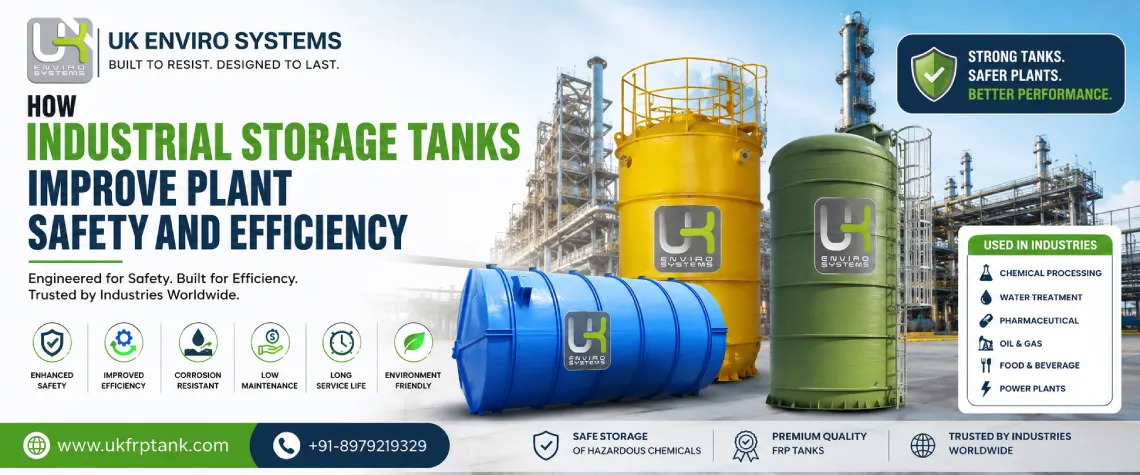
Industrial facilities face constant pressure. They need safe operations and high output. FRP Industrial Storage Tanks solve both challenges. These tanks store aggressive chemicals, water, and fuels. They prevent leaks and spills. They also reduce maintenance downtime. This blog explains the technical benefits. You will learn how Storage Tanks boost plant safety and efficiency.
The Material Science Behind FRP Industrial Storage Tanks
FRP Industrial Storage Tanks use fiber-reinforced polymer. This composite material offers unique properties. The matrix is thermosetting resin. The reinforcement is glass fiber. Together they create a strong structure. Unlike steel, FRP does not corrode. Unlike plastic, FRP resists high pressure. Industrial Storage Tanks handle pH extremes from 1 to 14. They withstand temperatures up to 100°C. This material stability prevents catastrophic failures.
Corrosion Resistance and Leak Prevention
Corrosion causes most tank failures. Metal tanks rust from inside and outside. Rust creates pinhole leaks. These leaks release hazardous fluids. Industrial Storage Tanks have no corrosion. The resin barrier blocks chemical attack. The fiber reinforcement adds mechanical strength. A reputable FRP Industrial Storage Tank Manufacturer uses vinyl ester or epoxy resins. These resins resist acids, alkalis, and solvents. Plant managers report zero leaks after switching to FRP. One chemical plant reduced spill incidents by 95%. Industrial Storage Tanks provide this safety margin daily.
Structural Integrity Under Dynamic Loads
Tanks experience many forces. Wind, seismic activity, and liquid movement create stress. Industrial Storage Tanks handle these loads well. The filament winding process aligns fibers at precise angles. This orientation maximizes hoop strength. Axial strength comes from longitudinal fibers. FRP Industrial Storage Tank Manufacturers follow ASTM D3299 standards. They test each tank to 150% of design pressure. A typical 10,000-liter tank withstands 0.5 bar internal vacuum. It also resists 2 bar external pressure. This robustness prevents implosion or explosion incidents.
Fire Safety Advantages of FRP Industrial Storage Tanks
Fire poses a major plant risk. FRP Storage Tanks offer inherent fire resistance. Manufacturers add fire-retardant additives to the resin. These additives meet UL 94 V-0 rating. The tank surface self-extinguishes within 10 seconds. Unlike steel, FRP does not conduct heat rapidly. This property keeps contents cooler during a fire. An Industrial FRP Tank Supplier can provide tanks with intumescent coatings. These coatings expand under heat. They create an insulating char layer. Firefighters gain critical response time. One refinery reported 30 minutes of additional escape time. FRP Industrial Storage Tanks save lives in fire scenarios.
Static Electricity Dissipation
Static sparks ignite flammable vapors. Traditional plastic tanks accumulate static charge. FRP Storage Tanks solve this problem. Manufacturers embed conductive carbon layers. These layers dissipate static to ground. Surface resistivity drops below 10^6 ohms. A certified Industrial Storage Tank Exporter offers tanks with anti-static liners. These liners prevent spark generation during filling. One paint plant eliminated all static-related fires. Industrial Storage Tanks make volatile chemical storage safer.
Efficiency Gains Through Reduced Maintenance
Downtime kills productivity. Metal tanks need frequent inspections. They require sandblasting and repainting. FRP Industrial Storage Tanks need almost no maintenance. The smooth inner surface resists buildup. No scaling or pitting occurs. Cleaning cycles take hours instead of days. One food processing plant saved 200 labor hours yearly. Industrial Storage Tanks remain operational for 30 years. Compare this to steel tanks needing replacement every 15 years. The total cost of ownership drops by 40%. An Industrial Tank Manufacturer designs FRP tanks for continuous service.
Faster Installation and Modular Design
Construction delays waste money. FRP Industrial Storage Tanks ship as complete assemblies. No field welding or coating required. Installation takes days, not weeks. A Custom Industrial Storage Tanks provider can match your footprint. Tanks come in diameters from 1 to 4 meters. Heights range up to 12 meters. Modular sections bolt together quickly. One wastewater plant installed two 50,000-liter tanks in three days. The old steel tank installation took six weeks. FRP Industrial Storage Tanks accelerate project timelines.
Weight Savings and Structural Loads
Heavy tanks require reinforced foundations. FRP Industrial Storage Tanks weigh 80% less than steel. A 10,000-liter steel tank weighs 2,500 kg. The same FRP tank weighs only 500 kg. This weight reduction lowers foundation costs. It also allows rooftop installation. One pharmaceutical plant placed six Industrial Liquid Storage Tanks on an existing mezzanine. No structural upgrades were needed. FRP Industrial Storage Tanks maximize existing space efficiently.
Process Optimization with Custom FRP Designs
Standard tanks rarely fit unique processes. Custom Industrial Storage Tanks solve this mismatch. FRP Industrial Storage Tanks Manufacturers offer unlimited design flexibility. You can specify nozzle locations, sizes, and types. You can add internal baffles for mixing. You can install heating or cooling coils. One chemical company needed a tank with 12 side ports. The FRP Industrial Storage Tank Manufacturer delivered in four weeks. Customization prevents dead zones in flow. It reduces product degradation. It also cuts pumping energy by 15%.
Integrated Monitoring Systems
Smart plants use real-time data. FRP Industrial Storage Tanks accept embedded sensors. Manufacturers install level probes during winding. They add temperature sensors and pressure transmitters. These sensors connect to plant SCADA systems. An Industrial Storage Tank Exporter provides tanks with pre-wired junction boxes. You get continuous inventory tracking. You also get leak detection at the molecular level. One refinery detected a 0.1 mm crack within one hour. Early warning prevents major incidents. FRP Industrial Storage Tanks enable predictive maintenance.
Chemical Compatibility and Fluid Handling
Wrong material selection causes disasters. FRP Industrial Storage Tanks suit thousands of chemicals. Resin selection matches the stored fluid. Isophthalic polyester works for water and mild acids. Vinyl ester handles strong acids and bleaches. Epoxy resists solvents and fuels. A knowledgeable Industrial FRP Tank Supplier performs chemical compatibility tests. They provide a resistance guide. One battery acid plant stored 30% sulfuric acid for eight years. No measurable degradation occurred. Industrial Storage Tanks made from FRP outlast any metal alternative.
Temperature Cycling and Thermal Shock
Processes often cycle between hot and cold. Metal tanks crack from thermal stress. FRP Industrial Storage Tanks handle thermal cycling well. The coefficient of thermal expansion matches concrete. No differential movement occurs between tank and foundation. FRP Industrial Storage Tanks Manufacturers design for ΔT of 50°C per hour. One food plant runs daily CIP cycles at 85°C followed by 5°C rinse. The FRP tank completed 5,000 cycles without failure. This thermal resilience means no unplanned shutdowns.
Compliance and Regulatory Standards
Plants must follow strict codes. FRP Industrial Storage Tanks meet global standards. BS EN 13121 covers design and testing. ASME RTP-1 applies for American installations. API 12P specifies oilfield use. A leading Industrial Tank Manufacturer holds ISO 9001 certification. They also comply with ATEX for explosive atmospheres. FRP Industrial Storage Tanks Manufacturers provide full documentation. You get material certificates and pressure test reports. These papers satisfy OSHA and EPA inspectors. One automotive plant passed inspection with zero findings after switching to FRP.
Secondary Containment Integration
Spill containment is mandatory. FRP Industrial Storage Tanks can include double-wall construction. The annular space monitors for leaks. A leak detection system sounds alarms instantly. Custom Industrial Storage Tanks also fit inside concrete dikes. The lightweight FRP allows smaller dike walls. One bulk chemical terminal reduced dike volume by 30%. FRP Industrial Storage Tanks simplify secondary containment design.
Case Study: Efficiency Improvement in Water Treatment
A municipal water plant used steel tanks. They stored ferric chloride and sodium hypochlorite. Corrosion caused frequent leaks. The plant replaced them with FRP Industrial Storage Tanks. The new tanks had no leaks after 36 months. Maintenance hours dropped from 40 per month to 2 per month. Pump run time decreased by 20% due to smooth interior surfaces. The plant achieved annual savings of 85,00000. An Industrial Storage Tank Exporter supplied these tanks in 8 weeks. This real example proves the benefits.
Selecting the Right FRP Industrial Storage Tanks Manufacturer
Quality depends on the maker. Choose an Industrial Storage Tanks Manufacturers with proven experience. Look for in-house filament winding machines. Verify their testing laboratory. A reliable FRP Industrial Storage Tank Manufacturer offers third-party inspections. They provide a 10-year warranty against corrosion. Ask for references from your industry. One Industrial Tank Manufacturer shares case studies upon request. Always request a sample coupon for chemical testing. FRP Industrial Storage Tanks from reputable makers last decades.
Quality Control Tests to Demand
Do not accept substandard tanks. Industrial Storage Tanks must pass specific tests. Barcol hardness confirms cure degree. A minimum reading of 35 is required. Hydrostatic testing proves leak integrity. Hold pressure at 1.5x working pressure for 4 hours. Spark testing detects pinholes in liners. Run at 15,000 volts for the entire surface. An FRP Tank Supplier performs all these tests. They also measure wall thickness ultrasonically. One plant rejected 10% of tanks from a low-cost supplier. Insist on full documentation. Industrial Storage Tanks demand rigorous quality.
Conclusion
Safety and efficiency go together. Industrial Storage Tanks deliver both. They resist corrosion and fire. They reduce maintenance and installation time. They accept custom designs and sensors. They meet all regulatory codes. A trusted FRP Storage Tanks Manufacturers partner ensures long service life. FRP Industrial Storage Tank Manufacturer expertise prevents costly mistakes. Industrial Storage Tank Exporter networks provide global access. Industrial FRP Tank Supplier relationships guarantee timely delivery. Custom Industrial Storage Tanks match your exact process. Industrial Storage Tanks made from FRP outperform all alternatives. Industrial Liquid Storage Tanks benefit from FRP’s chemical resistance. Industrial Tank Manufacturers increasingly choose FRP for new projects. Upgrade your plant today. Specify Industrial Storage Tanks for every critical application. Your workers will be safer. Your production will be more efficient. The numbers prove it. The technology works. Make the switch now.